Tel: 01635 38100
2025-2026
576 staff
Mean pay for women = £12.65 per hour
Mean pay for men = £12.62 per hour
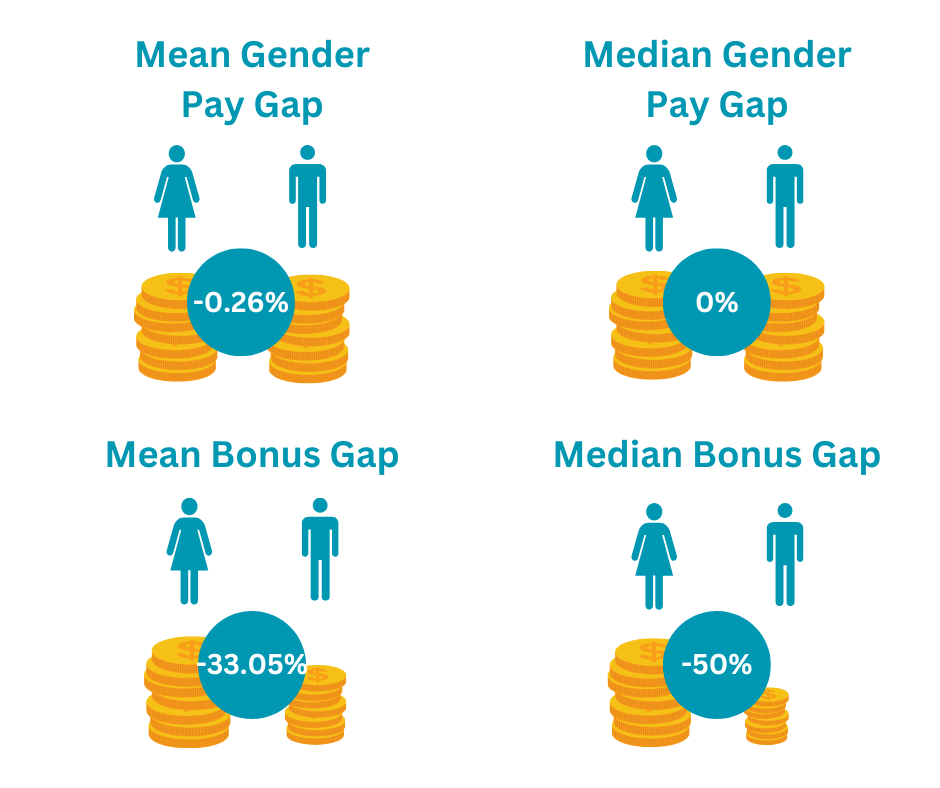
Mean Gender Pay Gap = -0.26%
Median pay for women = £12.21 per hour
Median pay for men = £12.21 per hour
Median Gender pay gap = 0%
Mean bonus for women = £257.22
Mean bonus for men = £193
Mean Gender pay gap for bonus = -33.05%
Median bonus for women = £152.10
Median bonus for men = £101.40
Median Gender Pay Gap = -50%
Introduction
As an employer we always aim to provide good working lives with fair pay for all of our staff. Regular monitoring and reporting of the Gender Pay Gap is part of this, highlighting the averages for men and women’s pay and comparing it, to highlight inequality with the aim of rectifying discrepancies. In accordance with UK Government regulations, organisations employing more than 250 staff are required to publish annual gender pay gap data. Deeland Ltd t/a ServiceMaster Clean reviews pay data annually to assess differences in average earnings between men and women and to identify any areas of inequality.
Workforce Profile
The organisation has a predominantly female workforce, with women representing a significantly higher proportion of employees, including at management level. This workforce composition continues to influence overall pay outcomes.
Pay Analysis
Pay analysis for the 2025 reporting period shows a consistently narrow gender pay gap within the organisation. The mean gender pay gap was ‑0.26%, indicating that average hourly earnings for women were marginally higher than those for men. This reflects a balanced pay structure and remains significantly below the UK average, continuing the organisation’s trend of minimal year‑on‑year variation in mean pay outcomes.
The median gender pay gap was 0%, confirming that men and women receive equal median hourly pay. This demonstrates parity at the midpoint of the pay distribution and indicates that pay equality is maintained across comparable roles rather than being influenced by a small number of higher or lower earners.
The organisation’s workforce profile, which includes a higher proportion of women overall and at management level, continues to influence these results. However, pay rates are determined by role, responsibility, and experience, ensuring consistency and fairness regardless of gender. There is no evidence of systemic pay disparity within the organisation.
Hourly pay comparisons show near‑identical mean and median rates for men and women, reinforcing the conclusion that gender is not a determining factor in pay levels. These outcomes align with the organisation’s commitment to equal pay for equal work and compliance with the Equal Pay Act.
Overall, the 2025 pay analysis demonstrates that the organisation maintains equitable pay practices, with gender pay differences remaining negligible and reflective of workforce composition rather than unequal pay structures.
Bonus Pay
Average bonus payments were higher for women than men during the reporting period. This resulted in a mean bonus pay gap of ‑33.05% and a median bonus pay gap of ‑50%, indicating higher bonus outcomes for women overall.
Equality and Fair Pay
The organisation is committed to fair and equitable pay practices. In line with the Equal Pay Act, men and women performing the same or similar roles receive equal pay. Flexible working arrangements are available across many roles, supporting work–life balance and internal career progression.
Ongoing Actions
Certain operational roles, particularly full‑time driving positions, continue to attract a higher proportion of male applicants. The organisation will broaden recruitment channels to encourage a more balanced applicant pool. Additionally, client engagement remains focused on securing fair rates that support equitable pay across the workforce.
Gender Pay Gap Benchmark Comparison (2025)
Measure | Our Organisation | UK Average (ONS) |
Mean gender pay gap | ‑0.26% | 6.9% |
Median gender pay gap | 0% | 6.9% |
Source: Office for National Statistics, Gender Pay Gap in the UK: 2025
The organisation’s 2025 gender pay gap compares very favourably with national benchmarks. While the Office for National Statistics reports a UK median gender pay gap of 6.9% for full‑time employees in April 2025, the organisation reported a 0% median pay gap and a negative mean pay gap of ‑0.26%, indicating pay parity and marginally higher average hourly earnings for women.
This comparison demonstrates that the organisation’s gender pay outcomes are substantially better than the UK average and reflect structured pay arrangements and balanced representation across roles, rather than systemic pay inequality.